

Your guide to Firestop systems and noise reduction
The best hotels aspire to make every stay unique and unforgettable. They also strive to ensure that guests are safe and enjoy privacy and comfort during their visit.
As a result, two major concerns of hotel owners and operators are to provide first-class fire protection and sound-deadening acoustics. Too often, these goals are undermined by poor specification, weak design and execution. To avoid this, the stakeholders of hotel projects should pay close attention to the specifications for fire protection and acoustics while maintaining commercially viability.
Why Fire Protection in Hotels is Crucial
More risks than you can count
An efficient compartmentation plan is essential in hotel facilities. It helps to protect lives, assets and prevents business operation interruptions. Moreover, the safer and more sound the sleeping guests are, the safer and more sound the hotel owners and operators can sleep too.
An important part of any compartmentation plan is the passive firestopping of cable and pipe penetrations. In addition to having strong fire integrity ratings, tested firestop systems also provide additional benefits. One of the key secondary attributes of a best-in-class firestop system is superior acoustic performance
Hilti has over 30 years’ experience in providing internationally tested and approved firestop systems for a wide range of applications that can cover an entire hotel project, helping you to achieve both efficient compartmentation and better acoustic performance.
Firestop systems contribute to noise reduction and enhanced privacy
For hotels, there are two relevant classifications of noise. “Airborne sound” is the term applied to fluctuations in pressure which spread out in a wave pattern and induce oscillation in the objects or parts of a structure they collide with. This applies to general “noise” made by people, the environment, machines, traffic and others.
On the other hand, sound that carries or spreads through a solid object is known as “structure-borne”. Structure-borne sound is usually not perceived as sound or noise but is noticed in the form of vibration. It nevertheless becomes audible when it radiates from the surfaces of a structure and is transformed into airborne sound.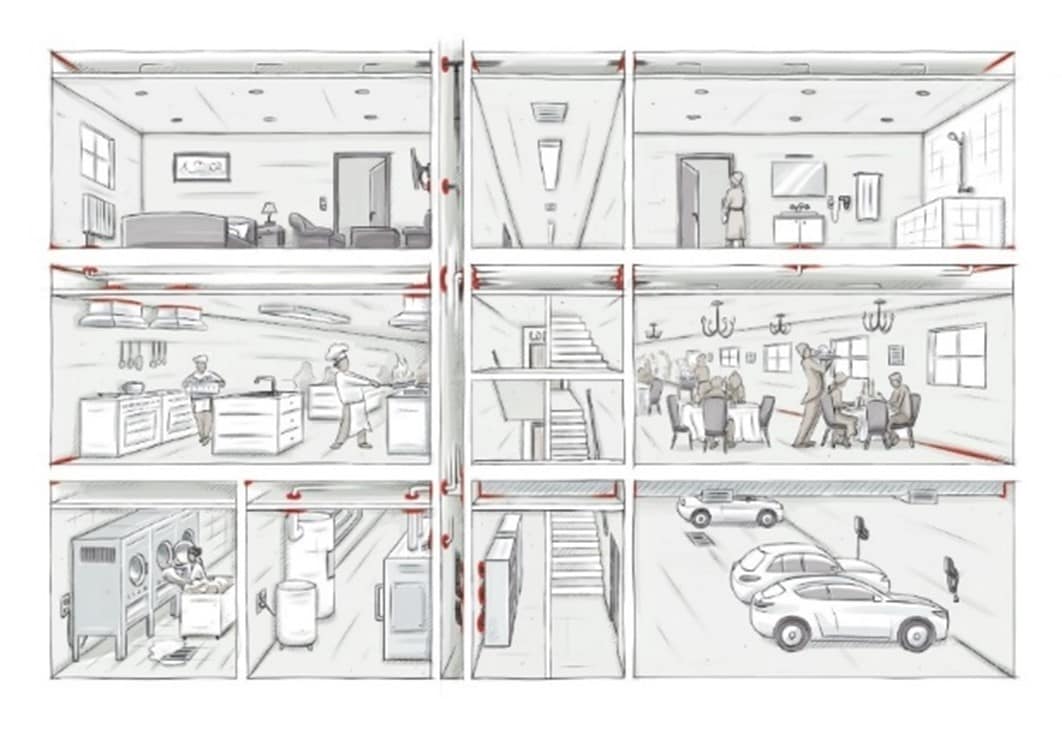
Guests’ privacy and comfort in a hotel may be compromised when noise travels uninhibited from one adjacent space to another. A common cause of this problem is due to inadequate acoustic insulation between rooms. Every gap in a wall or in a floor – such as a small cable or pipe penetration – can significantly reduce the acoustic performance.
That said, many sound insulation guidelines are laid out in a variety of directives, international standards, model building code and regulations throughout the world. However, these are generally a minimum, in most cases hotel owners and operators are wise to set themselves even stricter guidelines when it comes to sound insulation, to help ensure the comfort of their guests.
How firestop products contribute to airborne sound reduction
Walls and floors separating guest rooms, conference rooms, stairways, service or machinery rooms from each other need to meet certain sound transmission classes for airborne noise. Any opening on these elements caused by the various building services (i.e. pipes, cables) may have a negative impact on the sound performance of the walls or floors. Therefore, firestop solutions should not only help to maintain the fire rating of a wall or floor but also maintain the acoustic performance of the building elements.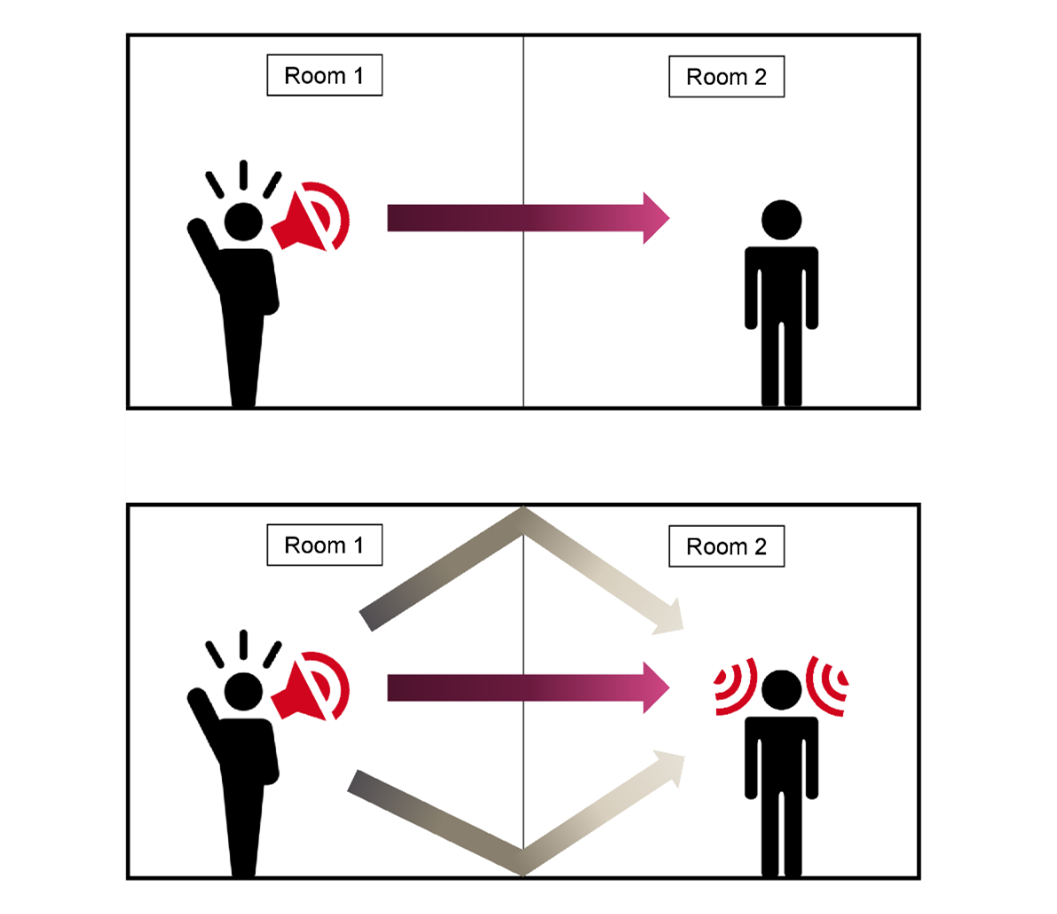
Airborne sound testing of building elements can lead to different interpretations and results
Hilti performs intensive testing of our firestop products for sound insulation performance, building on clear test standards.
In Hilti’s European Technical Assessments the methods of verification are test standards such as EN ISO 10140-1 and -2 as well as evaluation standards such as EN ISO 717-1 (which our local AS/NZS 1276.1 is based on). In regions where the American standards are followed, the acoustics performance is tested according to ASTM E90. Set-up and evaluations are standardized but results and interpretations can be complex as there are also many different categories and values, which can differ from country to country:
- STC = the STC or sound transmission class is a single number method of rating how well wall partitions reduce sound transmission. The STC rating very roughly reflects the decibel reduction of noise that a partition can provide.
- Rw = weighted sound reduction index. After evaluation with a reference curve. Single value without flanking noise
- C, Ctr = sometimes correction factors are added to a lab test to compensate for regular noise in a building or similar influencing factors
- Dn,e,w = normalized sound level difference of an element normalized on of 10 m² building elements
An acoustic test always involves a combination of the base material and the “tested object”. A sound measurement gives a result of the acoustic performance of the system. This calculation is a logarithmical addition of the two elements: the wall the installed firestop product/system.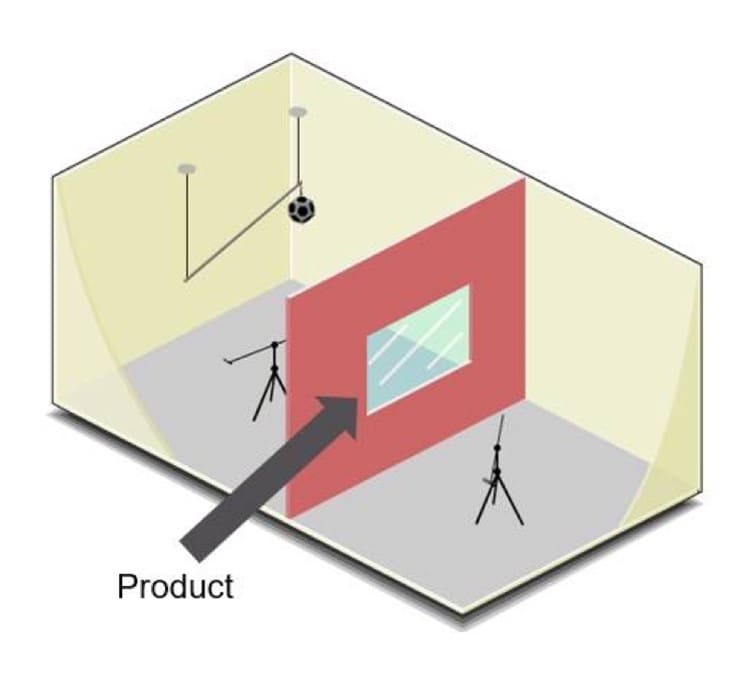
The results shown in test reports or certificates are sometimes not easy to interpret or compare as they can be significantly influenced by criteria like the size of wall, size of product or quality and construction of the wall.
As an example, many different drywall constructions have both a fire rating and sound insulation rating provided by the manufacturer. 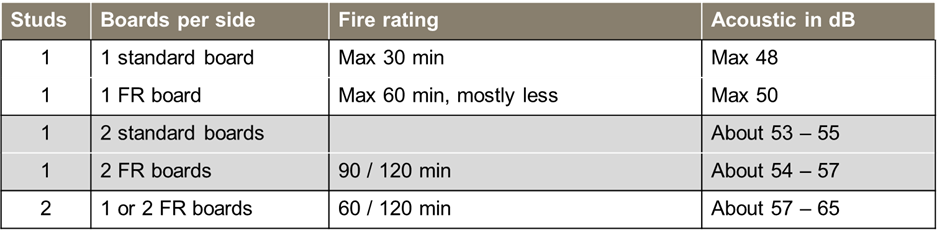
Example of different drywall systems
The specifics of a wall’s construction are important for both fire rating and acoustics. Just looking at a single value of a firestop product detailed in certain technical documents may lead to misinterpretations. This is because there are additional factors to be considered like the size of the wall and opening dimensions. Also, some acoustics tests are based on very limited and non-optimized test conditions and may result in incorrect conclusions.
Give your guests a safer, quieter experience by choosing Hilti firestop products with high acoustic performance.
Hilti offers firestop systems and solutions which are tested according to established and strict test standards. Products like the Firestop Block CFS-BL, or the new Firestop Top Track Seal CFS-TTS for interior finish top-of-wall joints, help to prevent the spread of fire and smoke and also optimize the acoustics ratings of a construction.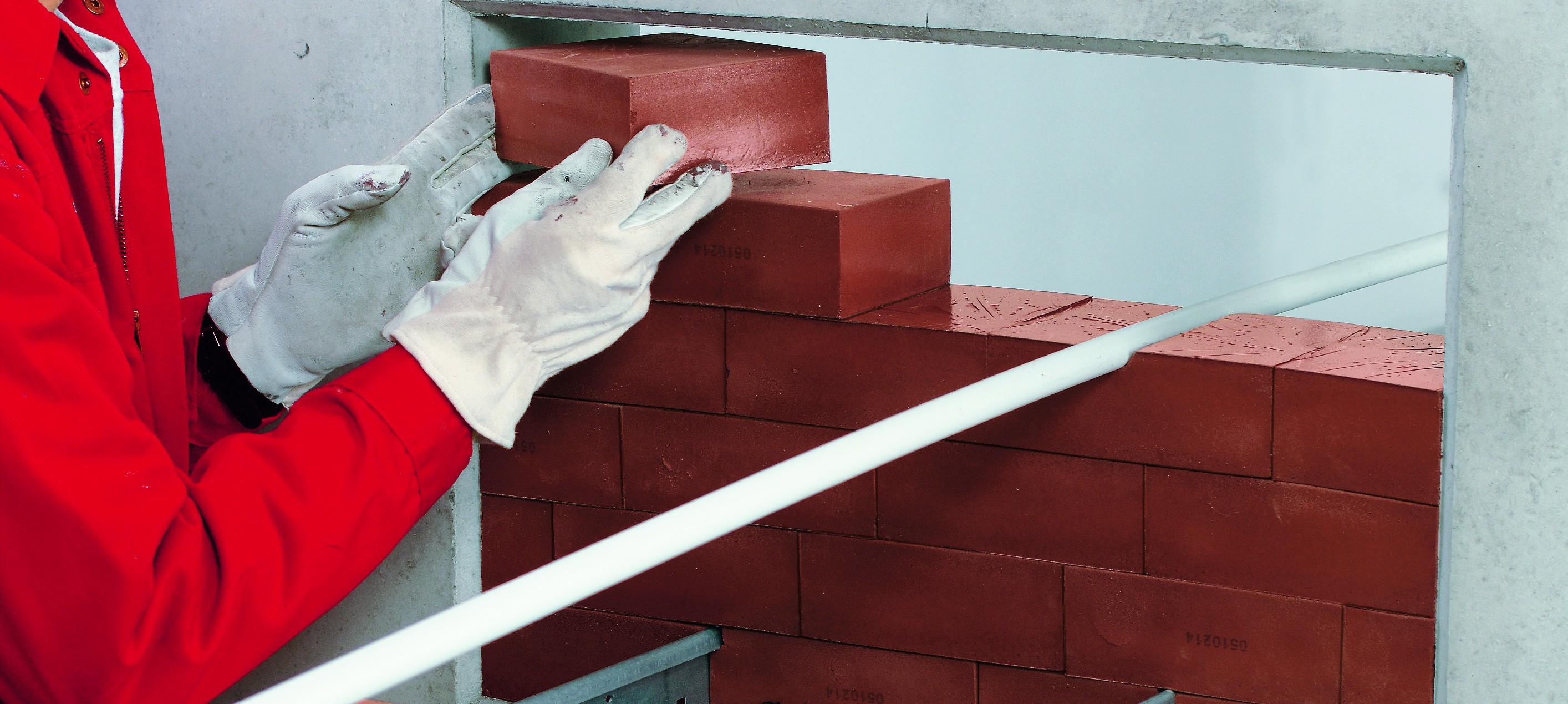
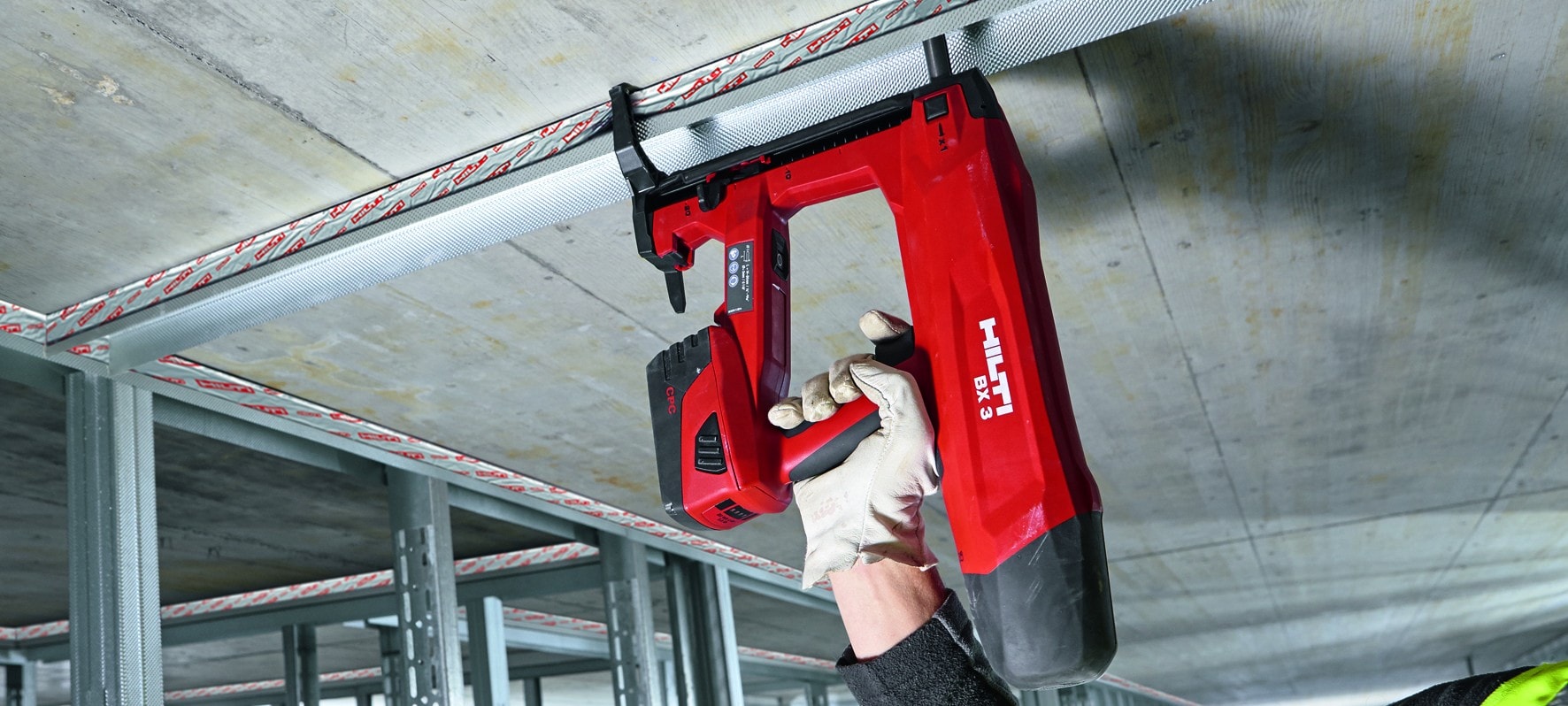
Hotel owners, operators, architects, MEP engineers and contractors can too easily make decisions based on marketing information and without understanding the finer points of firestopping, especially when it comes to additional performance criteria for hotels.
Acoustics is a key example of where it matters to make the right decisions in early phases of a project. Hilti offers you the technical know-how to help get it right, as well as the ability to advise you and offer engineered solutions and support during all phases of specification work.